
Man jailed for coercive and controlling behaviour against former partner
Main article content
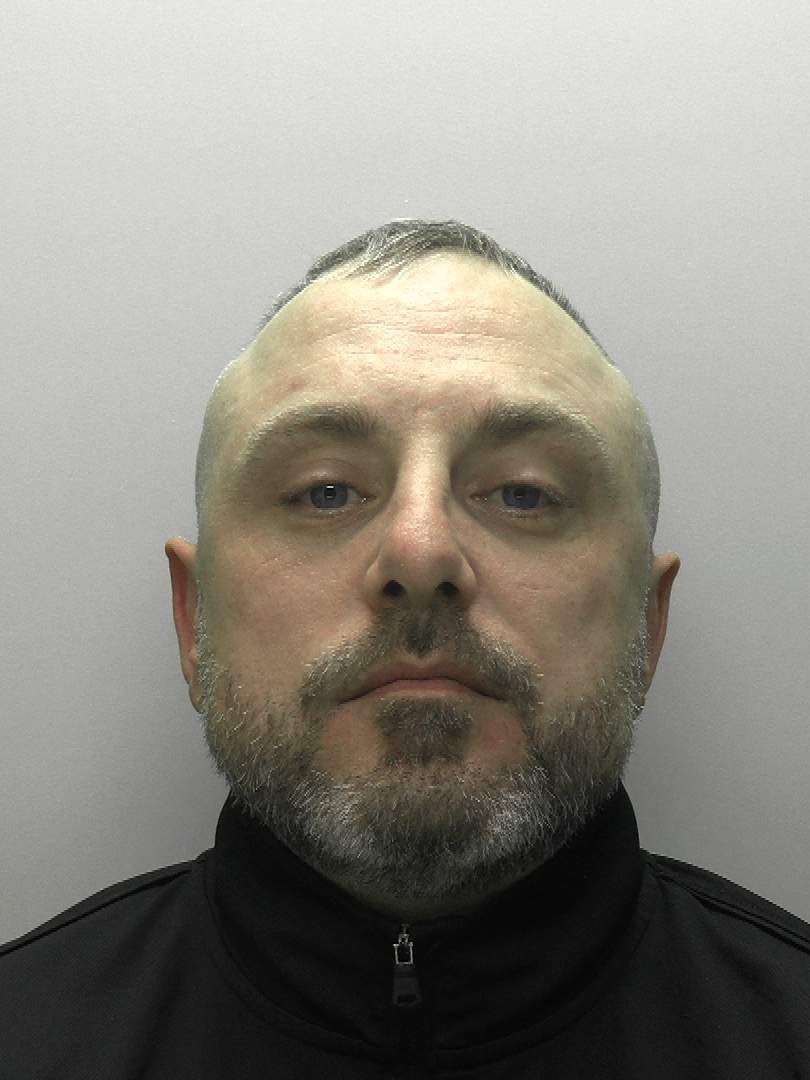
A man has been jailed and handed a 10-year restraining order for his coercive and controlling behaviour against a woman he had been in a relationship with.
The victim reported to the police what 34-year-old Anthony Marks was doing to her, and she chose to utilise Rapid Video Response (RVR) the following day - a video call with a police officer, instead of seeing an officer in person.
This additional way for victims and survivors of domestic abuse to contact police was launched by Gloucestershire Constabulary last year.
Marks, previously of Finlay Road, Gloucester was arrested on 2 May, the day after the RVR call, and after an investigation by the Constabulary's Reactive Investigation Team, he was charged and remanded in custody.
He appeared in court the following day and pleaded guilty to one count of engaging in coercive and controlling behaviour in an intimate relationship.
At Gloucester Crown Court on 23 July Marks was sentenced to 45 months imprisonment. This was reduced to 30 months due to credit for pleading guilty and for time spent on remand.
The victim, aged in her 40s, had repeatedly tried to end their relationship, however Marks made threats to harm himself and her. He persistently made contact with the woman and his pattern of behaviour continued for months, which caused the victim distress and to feel isolated and trapped.
A statement was read in court on her behalf. She said: "Since the abuse started my life has completely changed. Although I kept the abuse to myself, it became apparent to family and friends the dramatic change in my character and life.
"Not going to the gym, having to change regular appointments, not socialising with friends, cancelling plans, not posting photos on social media with fear of the consequences if a male friend would comment or like something I posted, not accepting friend requests with fear he can still monitor this.
"It became easier to hide away rather than have the backlash that isolated me even more.
"Anthony's actions towards me have completely destroyed my trust in people and destroyed my life. I am no longer the person I was and I don't think I will ever get her back.
"I need the court to understand that although there were no bruises to heal from the trauma of Anthony's actions, abuse continues to control my life.
"I look in the mirror, and I don't recognise the person looking back at me. I am a shell of the person I once was. No one should ever be destroyed by another person.
"This may just be another case file for the courts, but this is my life I've had taken from me. I deserve to feel safe again."
Investigating officer PC Charlie Griffiths said: "Marks repeatedly manipulated the victim and was controlling, which led to her feeling extremely unsafe and isolated.
"She bravely contacted police to tell us what he was doing, and we arranged a video call with her to gather information at the earliest opportunity.
"This resulted in Marks being arrested, and he hasn't stepped outside of custody since that day.
"Domestic abuse is not solely physical harm. It covers a range of behaviours which include violent or threatening behaviour, coercive control, and psychological and emotional abuse.
"We do not underestimate how difficult it can be to report these types of offences to the police, but please know you have options and choices available to you. If you're not sure if you want to speak to the police yet, you can seek support from a partner agency first."
For more information on domestic abuse, information on how to report and a list of organisations which provide support, visit: https://www.gloucestershire.police.uk/advice/advice-and-information/daa/domestic-abuse/
Professional support is available for anyone who has an abusive partner – you can contact Gloucestershire Domestic Abuse Support Service on 01452 726 570 or email: [email protected]. More information is also available on their website: https://www.gdass.org.uk/
To report a domestic abuse related incident call police on the non-emergency number 101. In an emergency, or if the incident is ongoing, always call 999.
The Domestic Violence Disclosure Scheme gives any member of the public the right to ask the police if their partner may pose a risk to them. It is often called 'Clare's Law' after the landmark case that led to it.
This scheme also allows a member of the public to make an enquiry into the partner of a close friend or family member. For more information on this visit: https://www.gloucestershire.police.uk/advice/advice-and-information/daa/domestic-abuse/alpha2/request-information-under-clares-law/
More information about Rapid Video Response
After making a report to police, domestic abuse victims and survivors have the choice to either see an officer in person, or, if it is deemed safe to do so, they can contact police and provide information through a video call from a location of their choice.
Rapid Video Response (RVR) is a victim-focused approach to reports of domestic abuse which uses technology to allow a victim to speak to officers.
Officers will gather information about the caller and any children, provide safeguarding advice, signpost to victim support services, put safeguarding measures in place and offer advice and support. Victims receive the same service as they would if an officer attended in-person, but without any delay.
The initiative uses GoodSAM, a video software which is used widely by police forces, and allows specially trained officers to speak with the victim, record offences and capture evidence providing a virtual frontline response.
An initial report to police would still need to be made by someone calling 999 in an emergency, or 101 for non-emergencies. A call handler will then take details and assess whether officers need to attend immediately due to a threat, or whether an officer can visit within a few hours if there is no ongoing threat.
If there is no immediate threat from a suspect and following a risk assessment, victims will be offered the choice of an officer to attend in person, or an RVR video call.
This is a crucial element and anyone who is in danger will still receive an in-person response from officers.
As part of the process a link will be sent directly to the victim's phone or suitable internet enabled device (tablet/laptop) allowing an officer to carry out the RVR call. During this call the officer will do the following:
- Speak directly with the victim to take an account of what has happened
- Record any criminal offences and risk assessments
- Provide immediate safeguarding advice and/or make relevant referrals on behalf of the victim
- Collect all available evidence such as screenshots, CCTV footage, or photographs
- Commence an investigation using the information collected
This process ensures an officer is in contact with the victim from start to finish and that evidence can be collected as quickly as possible after an incident report is made.