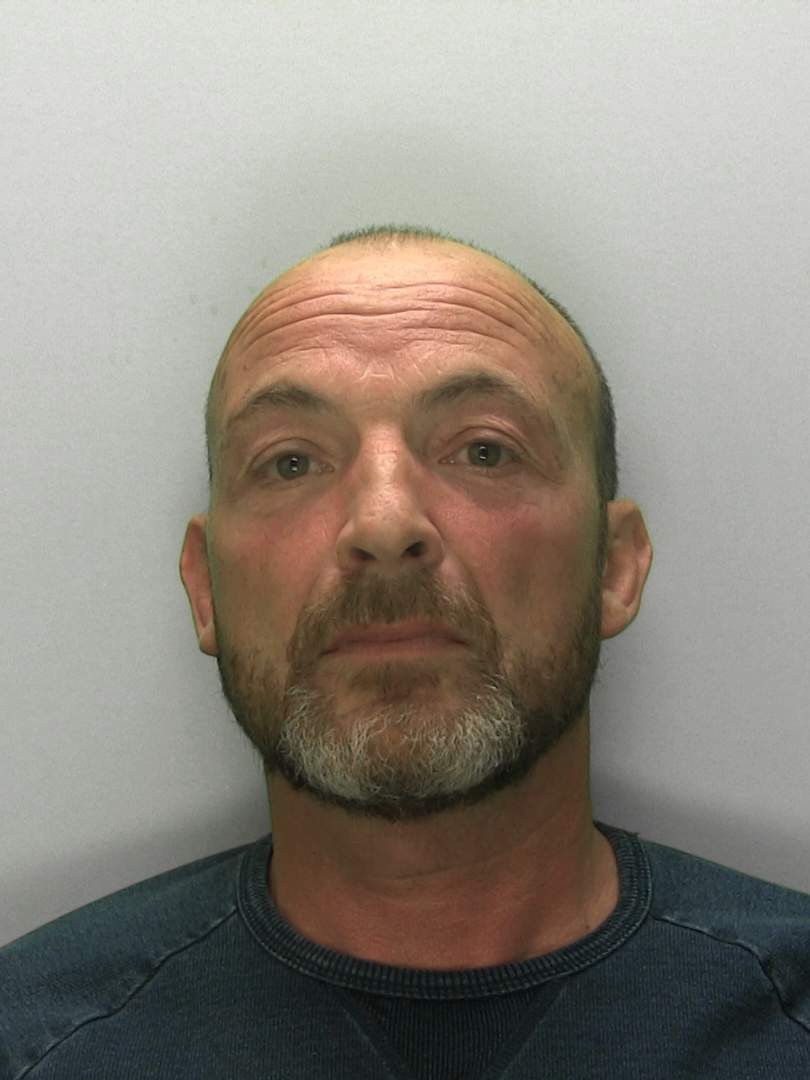
Man sentenced after being found guilty of coercive and controlling behaviour against a woman
Main article content
A 54-year-old man from Gloucester has been sentenced for coercive and controlling behaviour against a woman over a nine-year period.
The victim/survivor in the case, Tashya, told the court in a statement that she "lived in constant fear of what might happen next".
After the sentencing, she said: "I continued with court so that my voice and my children's voices were heard, and I want other victims to seek support and find their voices."
Tashya's former partner, Darren Kingscott, was given a five-year restraining order against Tashya and her children.
Yesterday (Thursday 29 October) Recorder Richard Mawhinney at Gloucester Crown Court sentenced Kingscott, of no fixed address, to 20 months imprisonment, suspended for 18 months.
The court heard how over a prolonged period of time Kingscott continuously engaged in coercive and controlling behaviour, which had a serious impact on the victims.
This included Kingscott causing Tashya and her children to fear violence in the family home due to threats, derogative and humiliating name calling, and causing them alarm and distress on a frequent basis.
On one occasion Kingscott threw a chair, which caused damage to the home, and he threatened violence with his fists and a bottle.
The court was told that Kingscott's behaviour between December 2015 and April 2024 had a substantial impact on the daily lives of the victims, which included them isolating in their bedrooms.
In Tashya's statement which was read to the court, she also described how the fear in the home affected their family dog.
She said: "The dog became constantly protective of me. Instead of being able to live a normal and happy life, it appeared to be constantly alert and focused on protecting me."
The court was told how soon after the relationship started, Tashya noticed Kingscott would become angry when he had been drinking alcohol.
He had a particular routine, such as not letting the family watch television at certain times, and would become angry and abusive.
Tashya had considered ending her life, and her children helped her leave the family home and they all moved to another address for a place of refuge.
In her statement, she said: "I never imagined that my life would become one of fear.
"For a long period of time, I lived in constant fear of what might happen next. I became used to watching what I said, what I did and how I behaved in an attempt to prevent situations from escalating.
"I was not living a normal life, I was surviving."
Tashya described how since the abuse ended, she continues to suffer with anxiety and nightmares, and she had to leave her job.
She added: "Coercive control changed the way I lived and the way I thought. I learned to anticipate danger. I learned to be careful. I learned to live with fear. Even now, part of me remains on high alert."
Following a Gloucestershire Police investigation, Kingscott was charged with one count of coercive and controlling behaviour and after a three-day trial at Cheltenham Magistrates' Court he was found guilty on 2 October, and the case was sent to crown court for sentencing.
Kingscott's defence barrister said he had a problem with drinking at the time and that he is a working man who "has moved on".
In sentencing Kingscott, the judge said he had to take into account references from Kingscott's employer, apprentice and family.
He added that there was a realistic prospect of rehabilitation and that Kingscott's pre-sentence report showed he did not present a high-risk of reoffending.
Alongside the suspended sentence, the judge ordered Kingscott to carry out 100 hours unpaid work, a 120-day alcohol abstinence and monitoring requirement, to pay £705 in court costs and £100 victim surcharge.
Detective Superintendent Ian Fletcher, Gloucestershire Constabulary's domestic abuse lead, said: "Coercive and controlling behaviour can often span a prolonged period of time with a victim/survivor being subjected to multiple forms of abuse.
"This can range from someone being made to feel isolated from their family and friends, not having control over their finances or feeling like they have to change their routine or habit.
"Ultimately they may feel like they have no control over their day-to-day life and could be living in fear on a daily basis.
"I do not underestimate how hard it must be to report this type of offending to the police, and to feel safe enough to leave an abusive partner.
"We want people to know there are options available to those who may feel like they are living in a similar situation. If you're not sure if you want to speak to the police yet, you can seek support from a partner agency first."
Domestic abuse is not solely physical harm. It covers a range of behaviours which include violent or threatening behaviour, coercive control, economic abuse, and psychological and emotional abuse.
For more information on domestic abuse, information on how to report and a list of organisations which provide support, visit: https://www.gloucestershire.police.uk/advice/advice-and-information/daa/domestic-abuse/
Professional support is available for anyone who has an abusive partner – you can contact Gloucestershire Domestic Abuse Support Service on 01452 726 570 or email: [email protected]. More information is also available on their website: https://www.gdass.org.uk/
To report a domestic abuse related incident call police on the non-emergency number 101. In an emergency, or if the incident is ongoing, always call 999.
The Domestic Violence Disclosure Scheme gives any member of the public the right to ask the police if their partner may pose a risk to them. It is often called 'Clare's Law' after the landmark case that led to it.
This scheme also allows a member of the public to make an enquiry into the partner of a close friend or family member. For more information on this visit: https://www.gloucestershire.police.uk/advice/advice-and-information/daa/domestic-abuse/alpha2/request-information-under-clares-law/