
DocBike: riders helping riders
Riders helping riders to avoid the next crash
DocBike brings together members of the motorcycling community, clinicians, emergency-service professionals and researchers with one shared aim: to prevent motorcycle collisions and reduce the number of motorcyclists who are killed or critically injured.
You can find out more about how they do this on the DocBike website here.
Independent, community-led and working in partnership
Police and ambulance-service support is important to DocBike’s effectiveness. DocBike is nevertheless an independent charity — not a police unit or a police-led campaign. Preserving that distinction helps its volunteers build trust with riders who may not normally engage with traditional road-safety initiatives.
Built from the motorcycling community
DocBike’s volunteers include motorcyclists, doctors, paramedics, police riders, instructors, researchers, bereaved family members, fundraisers and community supporters.
They meet riders where motorcycling happens: at bike nights, cafés, dealerships, shows, ride-outs, training events and community venues. Conversations are peer-to-peer, non-judgemental and focused on preserving the freedom and enjoyment of riding while helping people recognise and manage the situations most likely to end in a serious collision.
This community credibility is one of the charity’s most powerful injury-prevention tools. It gives riders a route into better hazard awareness, more skilful riding, BikeSafe, advanced training, BikerDown and other practical support — without feeling that they are being lectured or targeted.
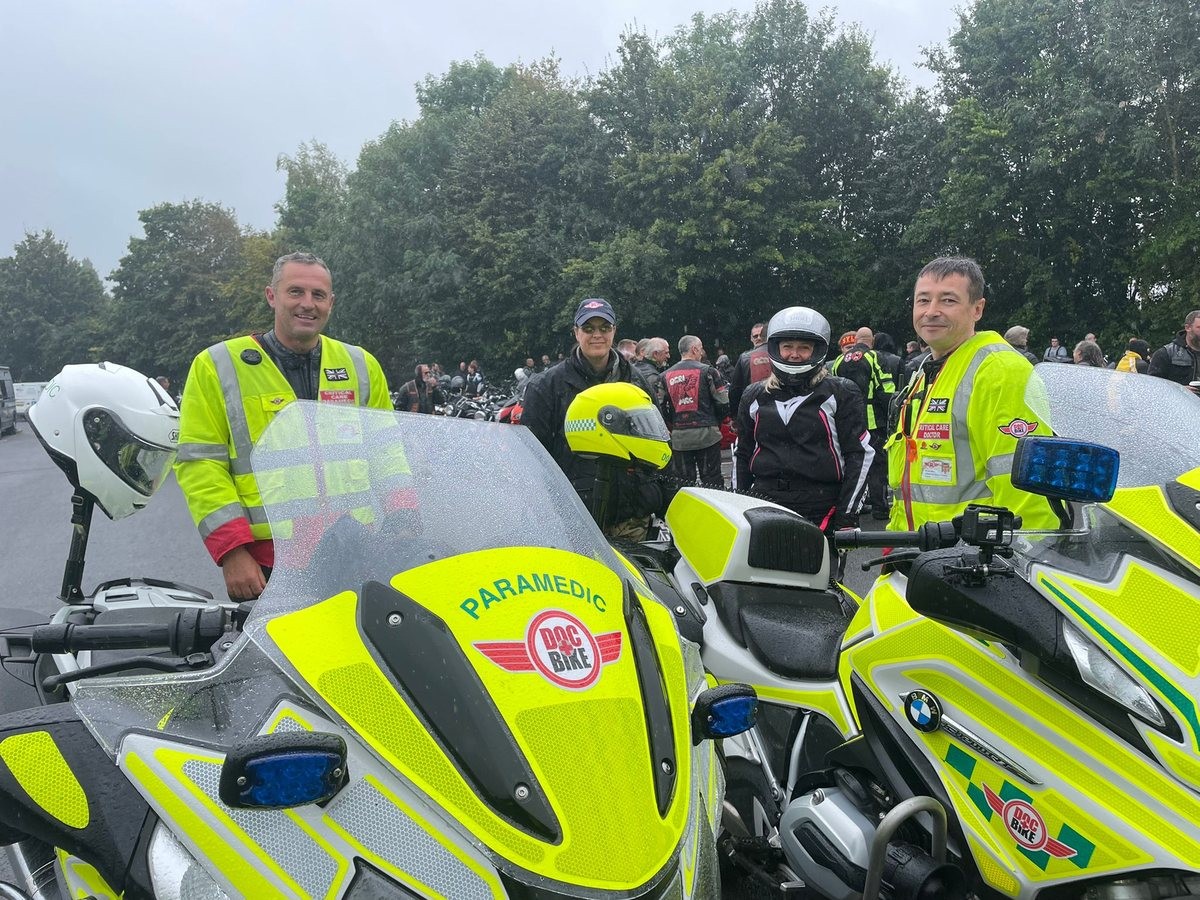
Clinical credibility can open conversations that conventional safety campaigns may struggle to begin.
Reaching riders who may be at greatest risk
Some motorcyclists who are most likely to be involved in a serious collision are also among those least likely to approach the police or engage with authority-led road-safety messaging.
DocBike does not replace police, BikeSafe, advanced-rider organisations or local road-safety partnerships. It provides a trusted community bridge to them. Once a conversation has begun, volunteers can share evidence about common collision scenarios, encourage riders to improve anticipation and decision-making, and signpost them towards training that can help them avoid a future crash — even when another road user might otherwise be considered at fault.
The response motorcycle: the visible face, not the whole story
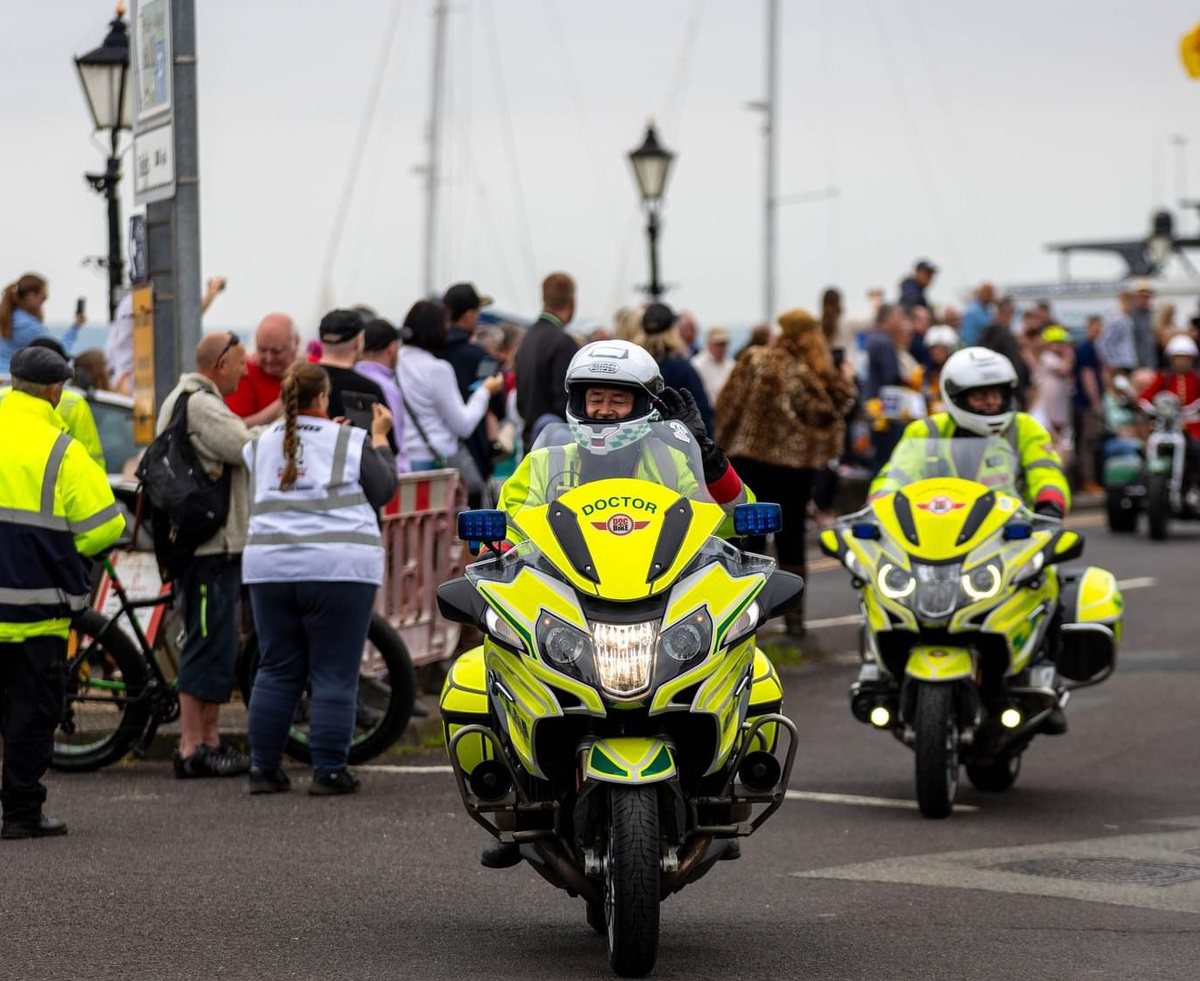
In areas where formal arrangements are in place, doctors and critical care paramedics can respond on blue-light motorcycles on behalf of the ambulance service and under its clinical governance.
The clinicians, motorcycles and equipment must sit within approved dispatch, clinical, riding, insurance and operational arrangements. This ensures that the response is safe, governed and integrated with the local pre-hospital system.
The response capability gives DocBike credibility with the motorcycling community and is a major reason many riders support the charity. In practice, however, emergency response represents a relatively small proportion of DocBike’s overall work. Most activity is focused upstream: engagement, education, collision prevention, partnership working, research and evaluation.
What DocBike does
The charity combines trusted engagement with practical education, governed clinical capability and research.
Rider-to-rider conversations
Positive engagement at events and within local motorcycle communities, including riders who may not respond to conventional campaigns.
Skills and collision avoidance
Evidence-informed advice, NextGen, BikeSafe links, advanced-training signposting and locally designed interventions.
BikerDown and first aid
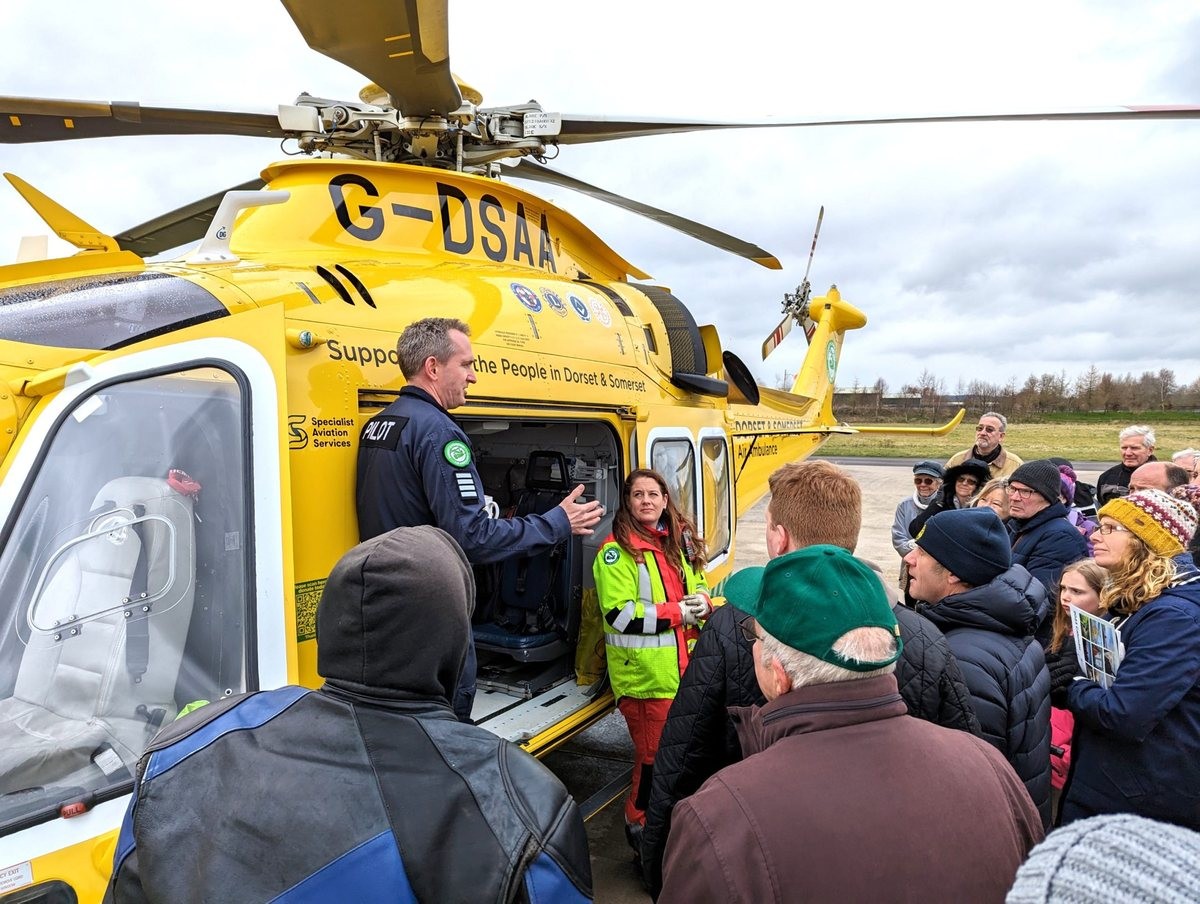
Helping riders and members of the public manage a collision scene and keep an injured person alive until emergency services arrive.
Governed critical care
Where approved locally, appropriately trained doctors and paramedics respond through ambulance-service clinical and operational governance.
Evidence that changes practice
Building the evidence base through MIPnet, PRANA and collaboration across health, police, transport, academia, industry and riders.
Working with police — while preserving community trust
Police services and Police and Crime Commissioners already enable important parts of DocBike’s work. The partnership is welcomed and valued, but it works best when the charity’s independent identity remains clear.
- Funding first-aid equipment used on BikerDown courses and community education.
- Supporting discounted high-security lock initiatives and other targeted prevention activity.
- Providing or facilitating suitable motorcycles, fleet arrangements and operational expertise.
- Supporting advanced rider training, response-riding governance and safe operating arrangements.
This is not about concealing partnership. It is about using the right identity in the right setting. At rider-facing events, DocBike’s community-led voice should remain at the front. Behind that engagement, police expertise, data, funding and governance can make the work safer, stronger and more effective.
Turning shared data into practical prevention
DocBike’s research activity seeks to answer two questions: why are motorcyclists being harmed, and which interventions are most likely to prevent that harm?
Motorcycle Injury Prevention Netowrk - MIPnet
MIPnet brings together riders, clinicians, researchers, police, transport specialists, engineers, industry and public contributors. Its purpose is to build a national, community-informed evidence base: who is injured, where, when and why; the health and societal burden; and which education, engineering, policing and behaviour-change interventions are effective, acceptable and cost-effective.
Visit MIPnet.org.uk or read the DocBike MIPnet overview.
Pre-hospital Research and Audit Network — PRANA
PRANA is a secure national clinical registry and collaborative research asset. Subject to formal information-governance, research and data-sharing approvals, it creates the opportunity to link pre-hospital, health-outcome and road-collision information so that prevention decisions are based on a fuller picture than any single dataset can provide.
Professional, governed and accountable
DocBike combines the authenticity of a community charity with the governance expected of an organisation working alongside emergency services, clinicians, researchers and public bodies.
DocBike is a Charitable Incorporated Organisation, registered with the Charity Commission for England and Wales as charity 1178486.
DocBike is registered with the Fundraising Regulator and has committed to the Code of Fundraising Practice and Fundraising Promise.
The charity’s trustees oversee national strategy, risk and sustainability. Its governance approach is informed by Charity Commission requirements and the Charity Governance Code.
DocBike received a Prince Michael International Road Safety Award in 2022 for its contribution to motorcycle injury prevention.
Work with DocBike
DocBike welcomes constructive collaboration with motorcyclists, police services, Police and Crime Commissioners, ambulance services, road-safety partnerships, researchers, industry and community organisations.
Whether the opportunity involves rider engagement, education, security, governed response capability, data collaboration or research, the starting point is a shared commitment to preventing avoidable harm while preserving the freedom and enjoyment of motorcycling.